
Memorial Hospital Surgical Services

At Memorial Hospital, we are committed to meeting the healthcare needs of our community close to home.
Staying local means you can receive high-quality surgical care while remaining near your support system of family and friends.
With more than 350 years of combined surgical experience, our team provides exceptional, compassionate care before, during, and after your procedure.

Our Surgical Services Department features four prep/hold rooms and two modern surgical suites, designed for comfort, privacy, and efficiency.
We continue to invest in the latest medical technology allowing us to perform a wide range of procedures safely and effectively.

Providers

Dr. Leah Speaks – General Surgeon
(Visiting Specialist)

Dr. Jesse Gray – General Surgeon
(Visiting Specialist)

Dr. Justin Klaassen – General Surgeon
(Visiting Specialist)

Dr. Michael “Shane” Frederiksen – Podiatrist
(Visiting Specialist)

Dr. Gary Weiner – Ophthalmologist
(Visiting Specialist)

Dr. Todd Reilly – Orthopedist
(Visiting Specialist)

Dr. Laki Evangelidis – Urologist
(Visiting Specialist)

Anesthesia

Horace Jenkins – CRNA

Danielle Stenger – CRNA

Example List of Surgical Procedures

Surgical Services

  1. Colonoscopy

    A procedure to view the inside of the colon using a small camera. It helps find sources of bleeding, pain, polyps, or early signs of colon cancer.

  2. EGD

    EGD stands for esophagogastroduodenoscopy.  During an EGD test, an endoscope (small, lighted camera on the end of a long, flexible tube) is used to examine the inside of esophagus, stomach, and upper intestine to check for ulcers, reflux, bleeding, or swallowing problems.

  3. Laparoscopic Hernia Repair

    A minimally invasive surgery to fix a hernia using small incisions and a camera, usually resulting in less pain and quicker recovery.

  4. Laparoscopic Appendectomy

    An appendectomy is a surgery to remove the appendix.  This is a common surgery that takes place when the appendix becomes infected, commonly referred to as appendicitis.  Your appendix is a thin pouch attached to the large intestine located in the lower right part of your abdomen.

    Symptoms of appendicitis may include the following:

    • Pain in the abdomen that continues to worsen over time
    • Upset stomach and vomiting
    • Loss of appetite
    • Trouble having a bowel movement (constipation)
    • Trouble passing gas
    • Swollen abdomen
    • Fever and chills
    • Loose stool (diarrhea)
    • Pain may feel worse when moving, taking deep breaths, being touched, coughing or sneezing
    • Pain may be felt all over abdomen if appendix bursts

  5. Laparoscopic Bowel Resection

    This type of surgery removes part of your colon (large intestine) in order to treat blockage that may occur due to bleeding, infection, ulcers caused by inflammation, and cancerous and non-cancerous tumors.  In a laparoscopic procedure the surgeon will operate with a scope used to see inside the body allowing smaller incisions to be made to remove the entire or parts of the bowel.  The benefits to this type of surgery may include: less pain after surgery, shortened hospital stay, faster return to solid-food diet, faster return of bowel function, and faster return to normal activity.

  6. Excisions of Lesions

    A lesion is an area of abnormal tissue, inside or outside the body, that may get bigger or change appearance.  A lesion is either benign (not cancer) or malignant (cancer).

    You should visit with your doctor if you have a lesion and experience any of the following:

    • Pain
    • Bleeding or inflammation
    • Infection
    • Noticeable growth or change in appearance
    • Itching


  7. Breast Biopsy

    A breast biopsy is a procedure that removes a sample of breast tissue so that it may be tested in a lab.  Pathologists, specializing in blood analysis and body tissue, can determine if there are any issues to cause concern.  A breast biopsy is mostly uncomfortable with minimal pain if any.

  8. Mastectomy

    A mastectomy is a surgical procedure that removes one or both breasts (double mastectomy) partially or completely.  The most common reason for this surgery is to treat breast cancer.  There are several kinds of mastectomies that can be performed.   Severity level and often times preference are deciding factors to which surgery the patient will undergo.

  9. Central Venous Line Insertion (CVL)

    A central venous line may be placed when long-term intravenous care is needed.  This procedure places a catheter in a centrally located vain (in the neck or chest) in order to give the patient fluids, nutrients, or medication.

  10. Carpal Tunnel Release

    Carpal tunnel has many causes.  At one time it was thought to be caused by the overuse of the wrist or hand, but more research has found that there are other possible reasons for this painful condition.  The carpal tunnel is formed by the wrist bones on the bottom, and the transverse carpal ligament across the top.  When this area is injured, swelling of the tissue can press on the median nerve causing numbness,  tingling, pain, and loss of function when not treated.

    Your doctor will likely try nonsurgical methods to treat the condition before performing a Carpal Tunnel Release.  If surgery is needed, the procedure itself is not complicated.  The complicated part comes after surgery when you are unable to use your hand while allowing your wrist to recover.  It is common to wear heavy bandage or a splint for up to two weeks, you have to keep the affected hand elevated while sleeping to decrease swelling, and after the bandage is removed you may need physical therapy.

  11. Hemorrhoid Treatments

    Hemorrhoid Banding:
    Hemorrhoids can be treated by a method called hemorrhoid banding; a procedure where a tiny rubber band is placed at the base of the hemorrhoid to cut off the flow of blood.  After about a week, the hemorrhoid usually shrinks and falls off.

    Hemorrhoidectomy:
    Another treatment option is excising the hemorrhoid.  The procedure involves cutting the hemorrhoids away from the anus using small cuts.

  12. Epidural Steroid Injections

    Lumbar Epidural Steroid Injections:
    Back pain and leg pain have been treated by steroid injections for decades.  It involves injecting a local anesthetic and a steroid medication directly into the epidural space that surrounds the spinal cord and nerve roots.

    Cervical Epidural Steroid Injections:
    Neck, shoulder, and arm pain can be treated with a steroid injection that places medication into the area around the spinal cord in your neck.

  13. Botox Injections for Migraines

    Many people associate Botox with “removing wrinkles”; a solution to hiding your age.  But Botox can also help with migraines as well.  If you get migraine headaches often, Botox injections may help to alleviate or dull the pain associated with migraines.  It is believed that it works as well as it does because it blocks chemicals called neurotransmitters that carry pain signals from your brain.  Botox essentially acts as a roadblock stopping the chemicals before they reach the nerve endings around your head and neck.

    The procedure uses a thin needle to inject tiny amounts of botulinum toxin into the muscles in your forehead, temples, and the back of your head and neck.

    Talk to your provider and see if this is a treatment option for you.

Preoperative Instructions

Be Prepared for Your Procedure Several Days Ahead

Have you followed the preoperative instructions exactly as outlined by your provider?
Examples might be:

  • Have you stopped taking any blood thinning medications, if instructed?
  • Have you had laboratory (blood) tests, if instructed to do so?
  • Have you adhered to dietary restrictions (and begun bowel prep if ordered)?
  • Nursing staff will attempt to contact you the business day before your procedure.  A message will be left on your voice mail ONLY if the patient is identified by name in the outgoing message.
  • Notify your physician if you have health changes between your last visit and the day of surgery, such as cold, fever, flu, etc.

What to Bring to the Hospital With You

  • List of medications you take (prescription, over the counter, and herbal supplements)
  • List of known allergies
  • Comfortable clothing
  • Your CPAP machine, if you use one for sleep apnea
  • An adult that can drive you home
  • Identification and insurance cards

The Morning of the Procedure

  • Do not eat or drink anything after midnight.  Patients who take blood pressure, heart or breathing medications may do so with a small sip of water early that morning.
  • Leave valuables such as jewelry at home.
  • Brush your teeth.  Avoid gum, hard candy, and chewing tobacco due to the increased risk of nausea and vomiting.
  • Bathe the morning of the procedure.  If you shampoo your hair, make sure it is dry and do not apply any hair product (that could be flammable).
  • If you are having an eye procedure, please do not wear makeup.
  • Wear clean clothing.
  • Check in at the registration desk and present photo identification and insurance cards.  You will receive an identification band and will then be directed to the surgical waiting area.
  • Females with childbearing capabilities will be asked to supply a urine specimen.
  • Patients will be asked to sign a surgical consent form.  Minors must have a parent or legal guardian sign a consent form before surgery can be performed.  The responsible individual must stay in the surgical area before, during, and after the procedure in the event of an emergency.

Following Surgery

  • Do not drive, sign important papers or make critical decisions for at least 24 hours.
  • Do not operative machinery, power tools, etc. for at least 24 hours.
  • Do not drink alcoholic beverages for at least 23 hours.
  • Your surgeon will provide you with post-operative instructions regarding diet, rest, and medication.  In the event of any difficulties or complications, call your surgeon immediately.

Outpatient Services

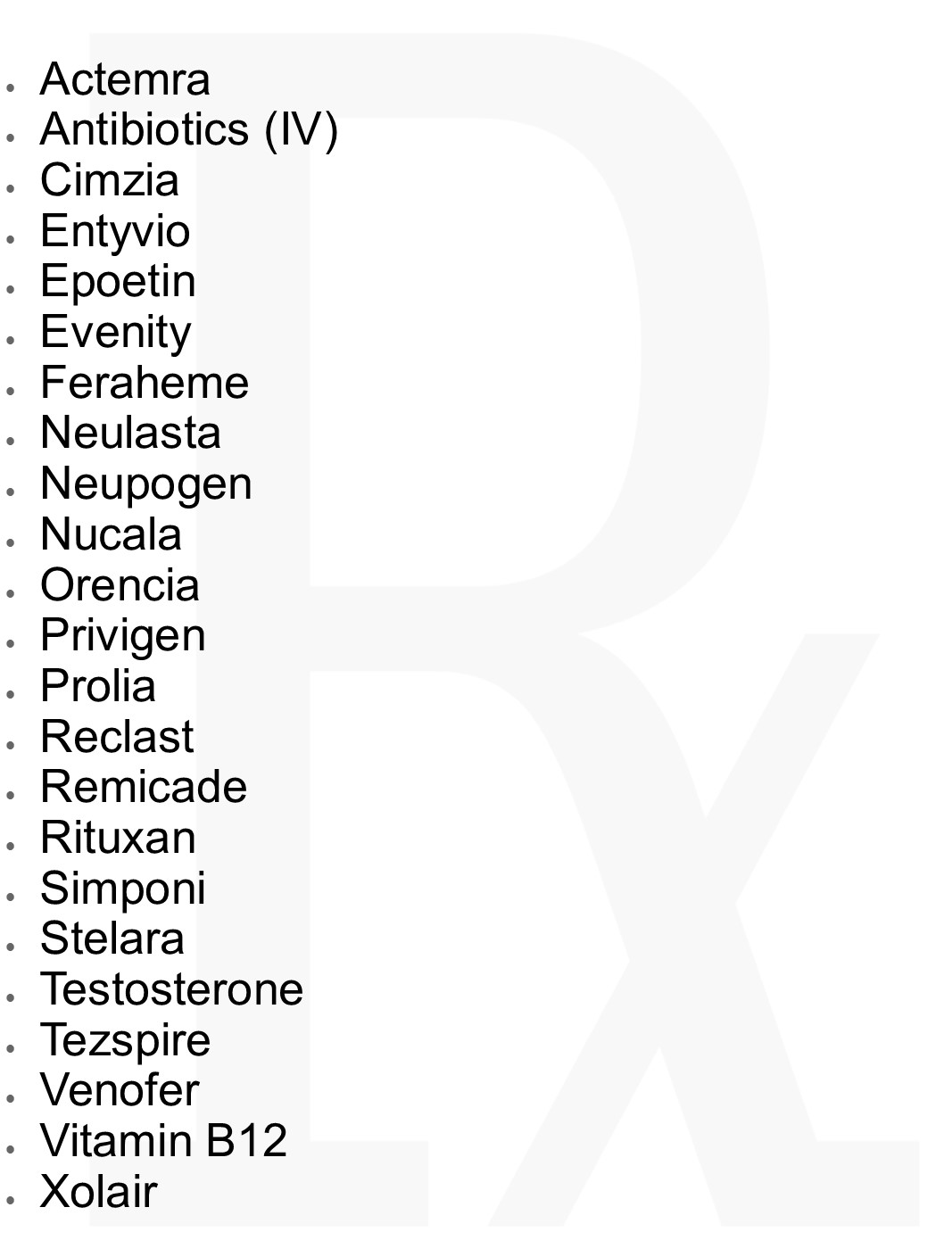
Memorial Hospital Surgical Services provides intravenous and injectable medications with physician orders for a wide range of conditions including but not limited to:

  • Anemia
  • Asthma
  • Crohn’s Disease
  • Immune Deficiency
  • Infection
  • Leukemia
  • Lupus
  • Psoriasis
  • Psoriatic Arthritis
  • Rheumatoid Arthritis
  • Osteoporosis
  • Testosterone Deficiency

Click HERE for a list of example medications that a patient can obtain through our outpatient services. 

Other outpatient services provided:

  • PICC Line Dressing Change
  • Port Flush
  • Wound Care
  • Epidural Steroid Injections
  • Botox Injections (for migraines)
  • Foley Catheter Insertion or Change
  • Discontinuation of Chemotherapy Pump

Considering Surgery?

There are several important things to consider when making the decision to have surgery.  Preparation is key to a successful outcome and recovery.  Below is a helpful checklist to make sure planning for your surgery goes smoothly.

  • Create a list of questions to ask your doctor or surgeon
  • Ask about your options: Do you really need surgery? Is there more than one type of surgery recommended?
  • Obtain a second opinion if that will make you feel more comfortable
  • Always check with your health plan regarding what kind of coverage you have
  • If you do not have health insurance, be sure to talk with the hospital billing department and discuss how payment will be processed
  • Prepare a list of all medications you are currently taking
  • Schedule any pre-op tests that are required
  • Know the health care team that will provide care to you
  • Follow all instructions given to you leading up to the day of surgery
  • Arrange for necessary care or equipment that you may need following the surgery
  • Be sure to understand the consent forms; don’t be afraid to ask questions
  • If your surgery will require a stay in the hospital, find out what you need pack for your stay and what is provided to you by the hospital
OR

Preoperative Instructions

Be Prepared for Your Procedure Several Days Ahead

Have you followed the preoperative instructions exactly as outlined by your provider?
Examples might be:

  • Have you stopped taking any blood thinning medications, if instructed?
  • Have you had laboratory (blood) tests, if instructed to do so?
  • Have you adhered to dietary restrictions (and begun bowel prep if ordered)?
  • Nursing staff will attempt to contact you the business day before your procedure.  A message will be left on your voice mail ONLY if the patient is identified by name in the outgoing message.
  • Notify your physician if you have health changes between your last visit and the day of surgery, such as cold, fever, flu, etc.

What to Bring to the Hospital With You

  • List of medications you take (prescription, over the counter, and herbal supplements)
  • List of known allergies
  • Comfortable clothing
  • Your CPAP machine, if you use one for sleep apnea
  • An adult that can drive you home
  • Identification and insurance cards

The Morning of the Procedure

  • Do not eat or drink anything after midnight.  Patients who take blood pressure, heart or breathing medications may do so with a small sip of water early that morning.
  • Leave valuables such as jewelry at home.
  • Brush your teeth.  Avoid gum, hard candy, and chewing tobacco due to the increased risk of nausea and vomiting.
  • Bathe the morning of the procedure.  If you shampoo your hair, make sure it is dry and do not apply any hair product (that could be flammable).
  • If you are having an eye procedure, please do not wear makeup.
  • Wear clean clothing.
  • Check in at the registration desk and present photo identification and insurance cards.  You will receive an identification band and will then be directed to the surgical waiting area.
  • Females with childbearing capabilities will be asked to supply a urine specimen.
  • Patients will be asked to sign a surgical consent form.  Minors must have a parent or legal guardian sign a consent form before surgery can be performed.  The responsible individual must stay in the surgical area before, during, and after the procedure in the event of an emergency.

Following Surgery

  • Do not drive, sign important papers or make critical decisions for at least 24 hours.
  • Do not operative machinery, power tools, etc. for at least 24 hours.
  • Do not drink alcoholic beverages for at least 23 hours.
  • Your surgeon will provide you with post-operative instructions regarding diet, rest, and medication.  In the event of any difficulties or complications, call your surgeon immediately.

Outpatient Services

Memorial Hospital Surgical Services provides intravenous and injectable medications with physician orders for a wide range of conditions including but not limited to:

  • Anemia
  • Asthma
  • Crohn’s Disease
  • Immune Deficiency
  • Infection
  • Leukemia
  • Lupus
  • Psoriasis
  • Psoriatic Arthritis
  • Rheumatoid Arthritis
  • Osteoporosis
  • Testosterone Deficiency

Click HERE for a list of example medications that a patient can obtain through our outpatient services. 

Other outpatient services provided:

  • PICC Line Dressing Change
  • Port Flush
  • Wound Care
  • Epidural Steroid Injections
  • Botox Injections (for migraines)
  • Foley Catheter Insertion or Change
  • Discontinuation of Chemotherapy Pump

Contact Us

Memorial Hospital Surgical Services Department
511 NE 10th St.
Abilene, KS 67410
Phone: (785) 263-6870

Surgical Scheduling
Phone: (785) 263-6816